More and more advanced artificial intelligence models are appearing on the market, and now the United States is also trying to catch up in the race. After China’s DeepSeek, France’s Mistral and America’s Grok 3, Anthropic has also unveiled its latest AI model.
Faster answers and transparent reasoning
On Monday, US-based Anthropic unveiled an advanced artificial intelligence (AI) model that can give faster answers while displaying its reasoning process step by step. The company aims to gain a competitive edge in the constantly expanding AI market, Reuters reported.
A hybrid reasoning model in a fierce race
Anthropic’s new hybrid model combines different reasoning approaches, making it possible to solve complex problems more efficiently. The innovation is much needed, as US tech companies are competing ever more intensely with each other and with Chinese rivals such as DeepSeek and Alibaba.
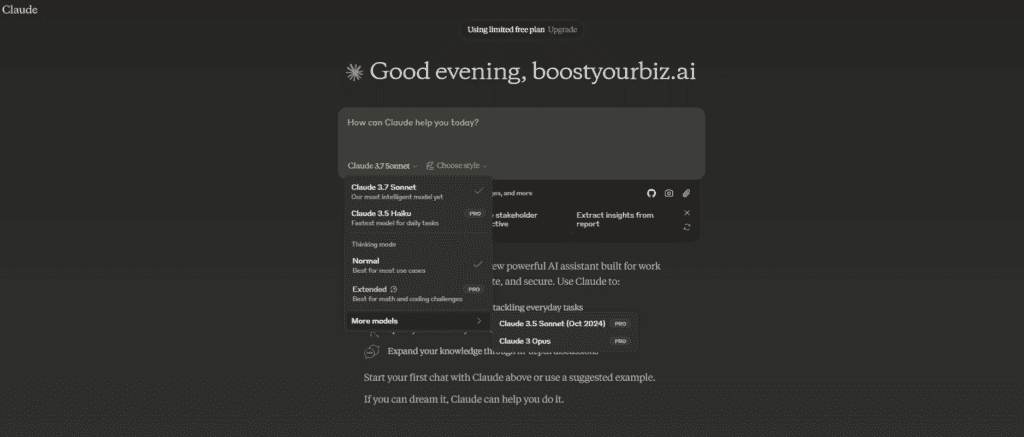
According to the startup, which is backed by Google and Amazon, Claude 3.7 Sonnet is its most advanced model yet, and it will be available in all Claude plans, including the Free, Pro, Team and Enterprise versions.
Exclusive features in the paid version
The feature called “extended thinking mode” will be available only to subscribers of the paid plans. In this mode, the model reflects on itself before answering, which significantly improves its performance in mathematics, physics, instruction-following and coding tasks, Anthropic said.
According to the San Francisco-based company, the hybrid reasoning model was designed to focus primarily on practical tasks and less on math or computer science problems, in line with how businesses actually use large language models.
Cost-effective artificial intelligence on the market
Anthropic also announced a limited preview of Claude Code, a specialised coding tool that supports programming tasks.
Although users can set how much time and how many resources they want to spend on answering a question, the company confirmed that the pricing structure remains unchanged compared with previous models.
However, the new model is more cost-effective than OpenAI’s o1 model: Anthropic’s Claude 3.7 Sonnet costs $3 per million input tokens and $15 per million output tokens, compared with OpenAI’s pricing of $15 and $60.